Disorderly Conduct
Book design and research thesis
There is a charge that appears over and over in Philadelphia's queer history. Not assault. Not theft. Not any act that hurt another person. Disorderly conduct. For decades, those two words were the legal instrument Philadelphia police used to raid bars, arrest people for dancing together, and remind an entire community that their existence was considered a public disorder.
I kept running into that phrase while researching what would become my thesis. And at some point I stopped thinking of it as a historical detail and started thinking of it as a design problem.
Design Approach
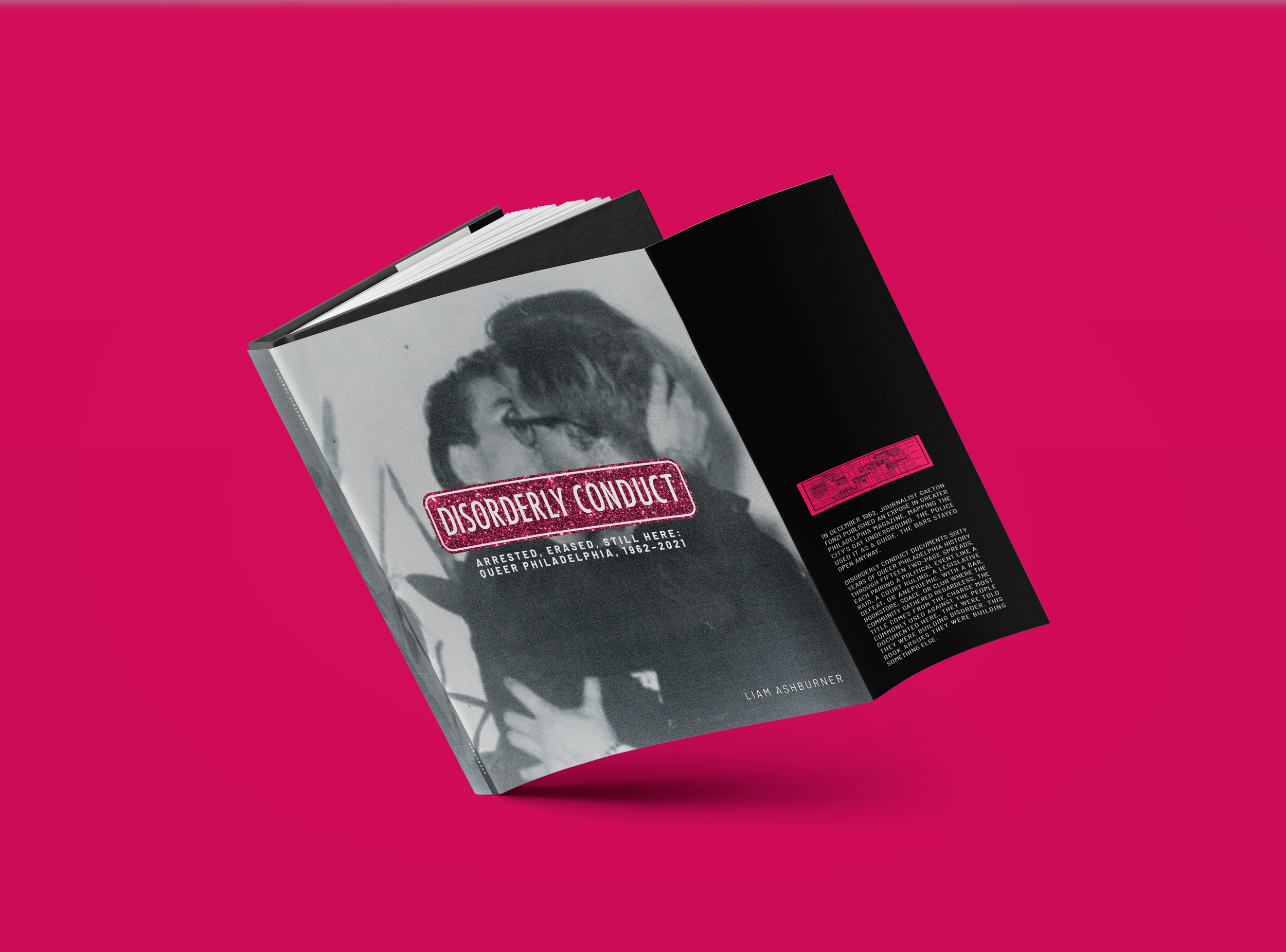
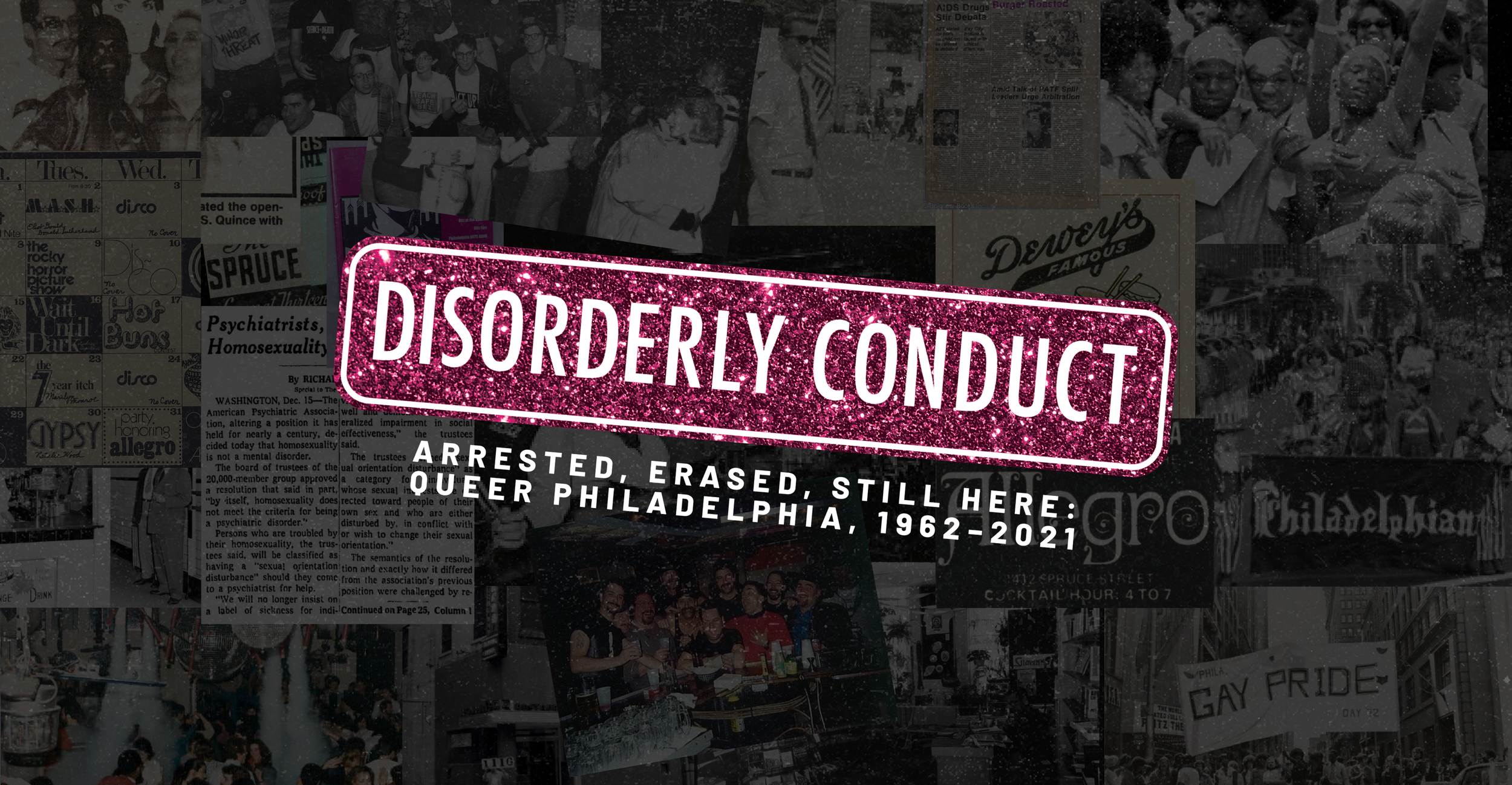
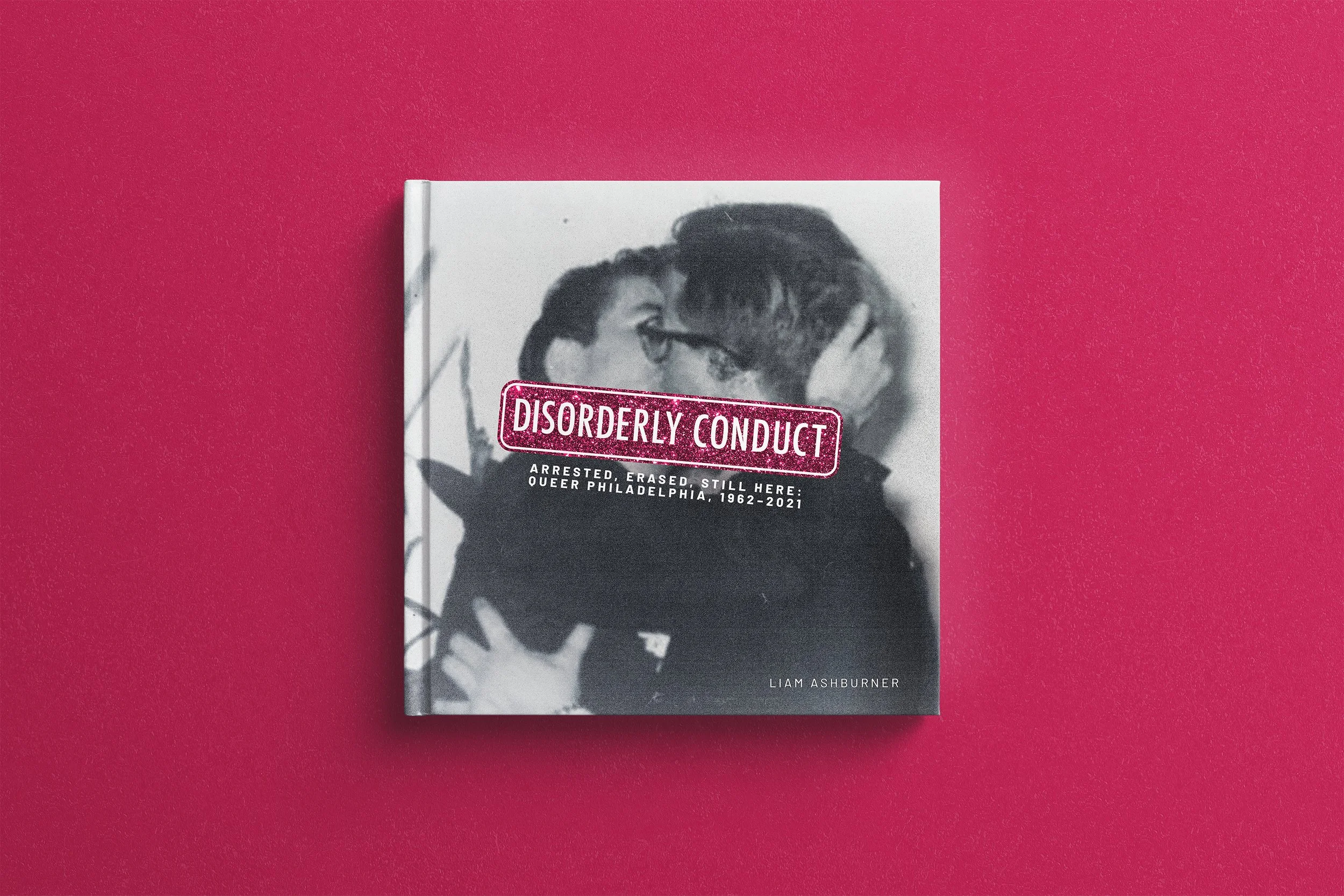
Disorderly Conduct uses the charge most commonly filed against gay and lesbian Philadelphians, disorderly conduct, as both its title and its primary design logic. The title treatment reclaims that charge: letterforms double-ruled and stamped in magenta glitter, referencing the look of an official document while redecorating the instrument of criminalization as something the community might claim for itself. The color system runs on saturated magenta and near-black against grayscale photography throughout. A consistent spread architecture placing a political event on the left and a gathering space on the right makes the book's central argument structurally: the community built its rooms before the law protected them, and kept building after the law failed.
Outcome
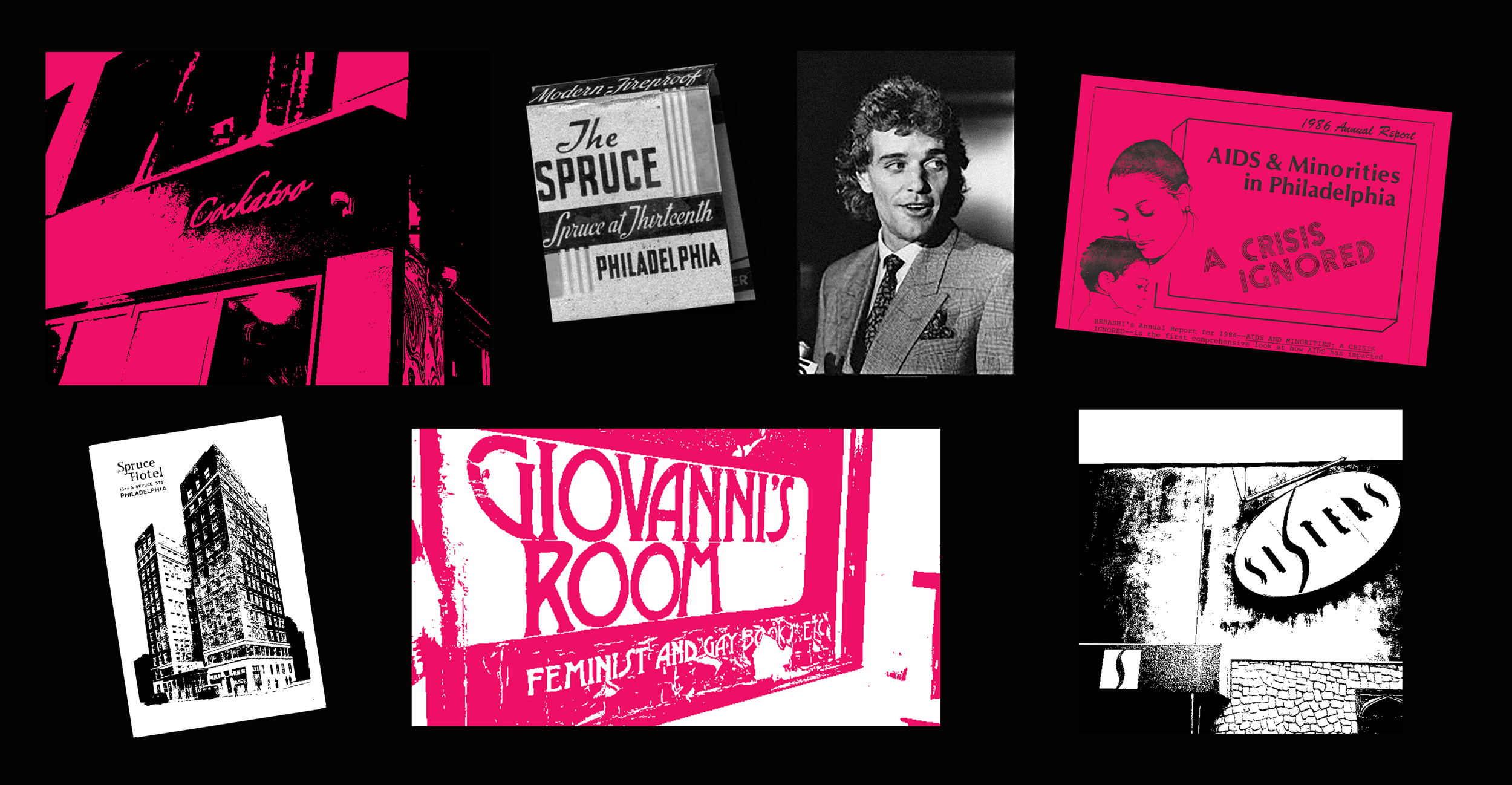
Disorderly Conduct demonstrates how editorial structure, typography, and archival material can function as argument rather than illustration. The book brings together primary sources from the John J. Wilcox Jr. LGBT Archives at the William Way LGBT Community Center alongside ephemera, photography, and press documentation into a single designed object that can be read, handled, and kept.